18 ChatGPT prompts for social media that are worth saving
Most prompts fail for one reason: they ask for a post without saying anything only you know. These eighteen pull that out of you first.
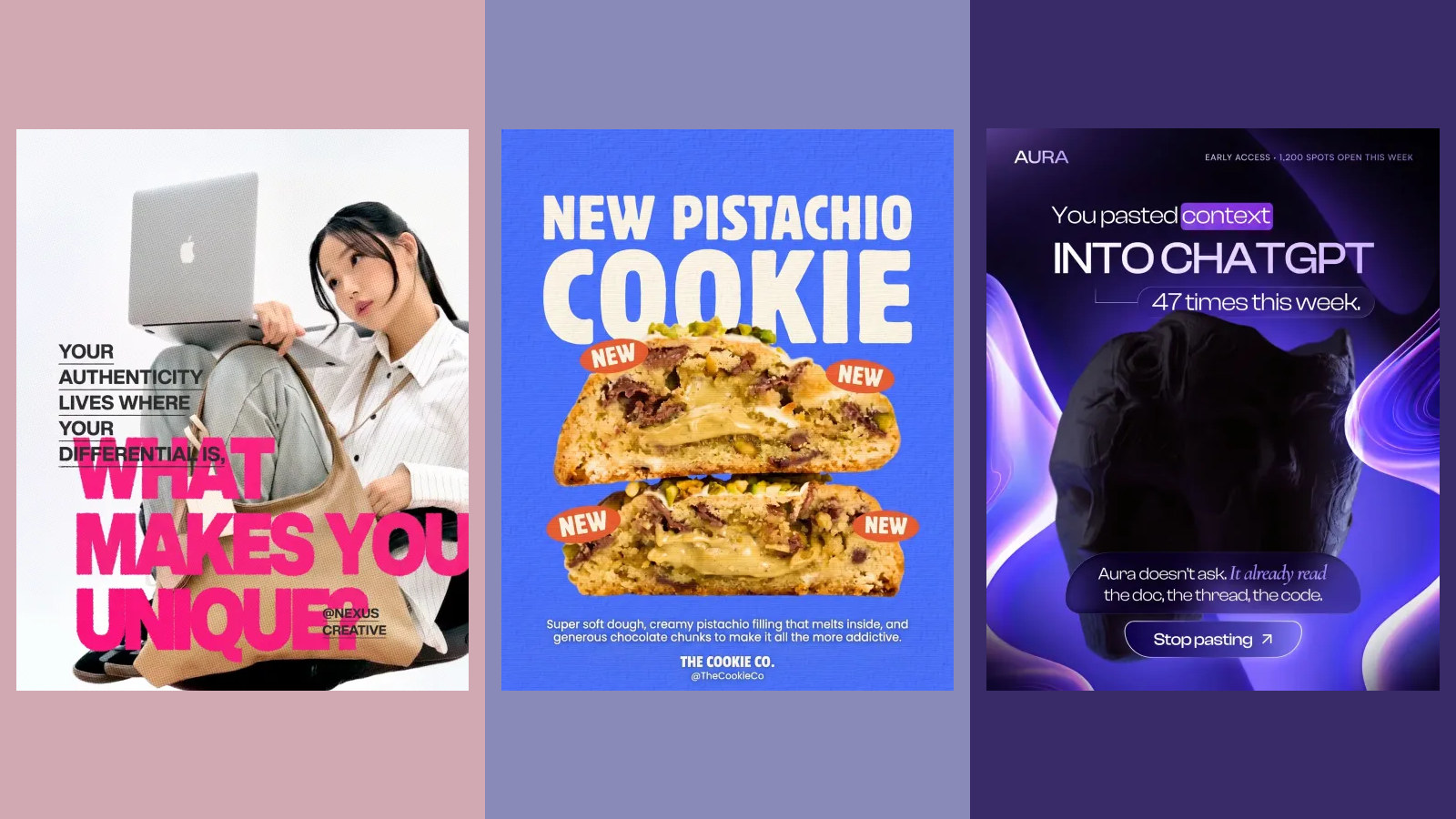
Write me an Instagram post about my bakery returns something that could be about any bakery on earth. That is not the model being weak. It is a prompt containing nothing only you know, so the model answers with the average of every bakery post it has ever read.
Our articles are still written by humans!
Get human written articles in your Google feed.
Every prompt below is built to pull that missing information out of you before it writes anything. They are longer than the prompts people usually share, and that is the entire point. Run the first one once, keep the answer, and paste it above the rest.
| Prompt group | Use it when | Why it fails without the brief |
|---|---|---|
| Brand brief | Once, before anything else | Nothing to fail yet, this is the input everything else needs |
| Ideas | Planning a month | You get twenty ways of saying buy our thing |
| Captions | Writing one post | Reads like a competitor could publish it unchanged |
| Per channel | One idea, five places | Same text with different hashtags, which each platform punishes |
| Rewrites | The draft sounds artificial | The model polishes the words and keeps the emptiness |

Start here: the brand brief
This is the one that makes the other seventeen work. Run it once, save the answer somewhere you can find it, and paste it above every prompt that follows.

1. Build a reusable brand voice summary
I run [business] in [place]. We sell [what] to [who]. What makes us different from the place down the road is [difference]. Our customers usually come to us because [reason]. Words I would never use about us are [words]. Write a six line brand voice summary I can reuse as context in future prompts. Ask me up to three questions first if anything is unclear.
The last sentence matters more than it looks. A model that asks first produces a summary built on your answers rather than its assumptions. If it asks nothing, your inputs were already specific enough.

2. Pressure test the summary
Here is the brand voice summary you wrote. Tell me honestly which parts of it could describe any competitor in my industry. Rewrite only those parts, and ask me for whatever detail you need to make them specific to us.
Prompts for ideas
3. A month of ideas without repeating yourself
Using the brand voice above, give me 20 post ideas for the next month. Do not write the posts. For each, give a one line hook and label it as one of: something we sell, something we know, something behind the scenes, something a customer said, something local. No more than four of any single type.

Forcing the mix is the whole trick. Left alone the model hands you twenty variations of a promotion. If you want the reasoning behind that spread, it is in what a small business should actually post about.
4. Ideas from what you already know
Ask me five questions about mistakes my customers make before they find us. Then turn each answer into a post idea that teaches the answer without naming a competitor.
5. Ideas from the calendar
Here is my brand voice. List the moments in the next 60 days that genuinely matter to my customers, not generic awareness days. For each, give one post idea that would still make sense if the date were not attached.
6. Ideas from objections
List the eight reasons someone would decide not to buy from us. For each, write a post idea that answers the objection honestly rather than dismissing it.
Prompts for captions
7. Turn one idea into a caption
Write an Instagram caption for idea number 4. The first line has to work alone, because that is all anyone sees before tapping more. No hashtags in the body. Under 80 words. Do not open with a question. Give three versions with different first lines, and after each say in one sentence who it is aimed at.

8. Write the first line on its own
Give me 10 opening lines for this post. Five that state something surprising and true, five that start mid story. No questions, no emoji, nothing that could open a post for a different business.
9. The caption that has to sell something
Write a caption for [offer]. Say the price. Say who it is not for. One call to action at the end, phrased as what happens next rather than as an instruction. Under 70 words.

Naming who it is not for does more work than any adjective. It is also the fastest way to stop a caption sounding like an advert.
10. Hashtags, separately
Suggest 12 hashtags for this post: four that describe what it is, four for my location, four for the audience. No hashtags with over a million posts. Do not put them in the caption.
Keeping them out of the body is deliberate. Whether they are worth adding at all is a longer argument, and we made it in do hashtags still work.
11. Captions in a batch
Here are five approved ideas. Write a caption for each. Vary the structure between them: one story, one list, one single observation, one behind the scenes note, one direct offer. Do not reuse an opening pattern.
Prompts for each channel
The failure here is pasting one caption everywhere. Each platform rewards something different, and the model will happily produce the same text five times if you let it.

12. One post, every channel
Take the caption above and adapt it for LinkedIn, Facebook and TikTok. Do not paste the same text with different hashtags. LinkedIn leads with the business reason it matters. Facebook can be longer and warmer. TikTok is a spoken script of 20 seconds with a visual note per line.
13. LinkedIn without the LinkedIn voice
Rewrite this for LinkedIn. No thought leadership framing, no one word opening lines, no rhetorical question. Lead with the specific thing that happened and what it cost or saved. Under 120 words.
14. A TikTok or Reels script
Turn this into a 20 second script. Give me the spoken words and, beside each line, what is on screen. The first three seconds have to state the payoff, not tease it.
Short video is enough of its own discipline that one prompt does not cover it. The hooks, the shot lists and the constraint that makes a script filmable by one person are in our ChatGPT prompts for Instagram Reels scripts.
15. A Google Business post
Write a 90 word Google Business update from this idea. Plain, factual, no exclamation marks, and include the practical detail someone would search for.
Prompts for fixing what came out wrong
16. Fix a caption that reads like AI
This caption sounds like a machine wrote it. Rewrite it so it does not. Remove anything that could appear unchanged on a competitor page. Cut every adjective doing no work. Keep one specific detail, and if there is not one in the text, ask me for one.

That last clause is the one that works. The usual reason a caption sounds artificial is not its style, it is that it contains no facts. We took that apart in why AI posts sound like AI.
17. Cut it in half
Halve the word count without losing any concrete detail. Remove setup sentences before the point. If something has to go, remove opinion and keep fact.
18. Check it against the brief
Score this caption out of 10 against my brand voice summary, and say what would need to change to score 10. Do not rewrite it. If it already scores 8 or more, say so and stop.
Telling it to stop matters. Ask a model to improve something and it will improve it forever, including past the point where it was right.
Do these work in Claude and Gemini
Yes. Nothing here is specific to ChatGPT. The differences between models show up in tone rather than usefulness: Claude tends to write longer and hedge more, Gemini is more literal about constraints like word counts. The brand brief matters more than which model you pick.
If you have settled on one of them, each has its own habits worth prompting around, and we wrote a set for each: Claude prompts for Instagram posts, Gemini prompts for social media, and Copilot prompts for LinkedIn posts for anyone whose working day already happens inside Microsoft 365.

Where prompts stop being enough
Prompts are excellent for a post. They get tiring at thirty, because you are still the one running them, pasting results, finding an image, and remembering it is Tuesday. That is not a prompting problem and no prompt fixes it.
If that is where you are, the alternatives are laid out in the ten AI social media tools worth knowing, and what it costs to hand the whole thing to a person instead is in what social media management actually costs. If you are the person being handed it, running these prompts for someone else's business, the pricing question points the other way and we answered it in how much to charge for social media management.

Frequently asked questions
What is the best ChatGPT prompt for social media posts?
The brand brief, run once and pasted above everything else. On its own it writes nothing, but it is the difference between a caption that could belong to any business in your industry and one that could only be yours. Every other prompt in this guide assumes it has been run first, and most of them produce generic output without it.
Do these prompts work in Claude and Gemini as well as ChatGPT?
Yes, none of them depend on ChatGPT specifically. Claude tends to write longer and add more caveats, and Gemini follows hard constraints like word counts more literally. If a prompt gives you something too long, adding a strict word limit fixes it in every model.
Why do all my ChatGPT captions sound the same?
Usually because each prompt starts from nothing. Without brand context and one concrete detail to hold on to, the model falls back on the average of everything it has read, which is what people mean when they say something sounds like AI. The fix is not a better writing instruction, it is giving it a fact.
Should I ask ChatGPT for hashtags in the caption?
Ask for them separately. Requested inside the caption prompt they get woven into sentences, which reads badly and is hard to strip out later. Prompt 10 keeps them apart and caps them at tags that are actually reachable.
How many posts can I realistically write with prompts?
One at a time, indefinitely. A month at once is where it stops being pleasant, because you are still running each prompt, copying the output, sourcing an image and scheduling it. Most people abandon prompt driven posting somewhere in the second month, and it is the admin that ends it rather than the writing.
Can ChatGPT post directly to Instagram or LinkedIn?
No. It writes the text and stops there. Publishing needs either you doing it by hand or a tool connected to the channels, which is the difference between a writing tool and a social media tool.
How we researched this
- These eighteen are the prompts left standing after we rewrote our own product's prompt layer several times. Building a generator that has to produce usable posts for a plumber, a yoga studio and a law firm from the same code forces you to find out which instructions survive contact with a business you know nothing about, and which only ever worked because a human was quietly filling in the gaps.
- The pattern every one of them follows, of extracting what only you know before writing anything, is the same pattern our pipeline uses. That is not a coincidence and it is the honest reason the prompts are longer than the ones usually shared.
- Every prompt here was run by hand in a chat window before it was published. Prompts that only worked for one imaginary business were cut rather than reworded.
- Model behaviour changes without notice, so nothing in this piece depends on a specific model version, and none of it claims a particular model is best. Where output quality is described, it is described as a tendency you should expect to check, not a guarantee.
Sources