
What to post on social media for a business
Running out of ideas is the real reason most businesses go quiet, not lack of time. Six repeatable post types, where the material for each one already exists in your week, and what changes when you move the same material between Instagram, Facebook and LinkedIn.
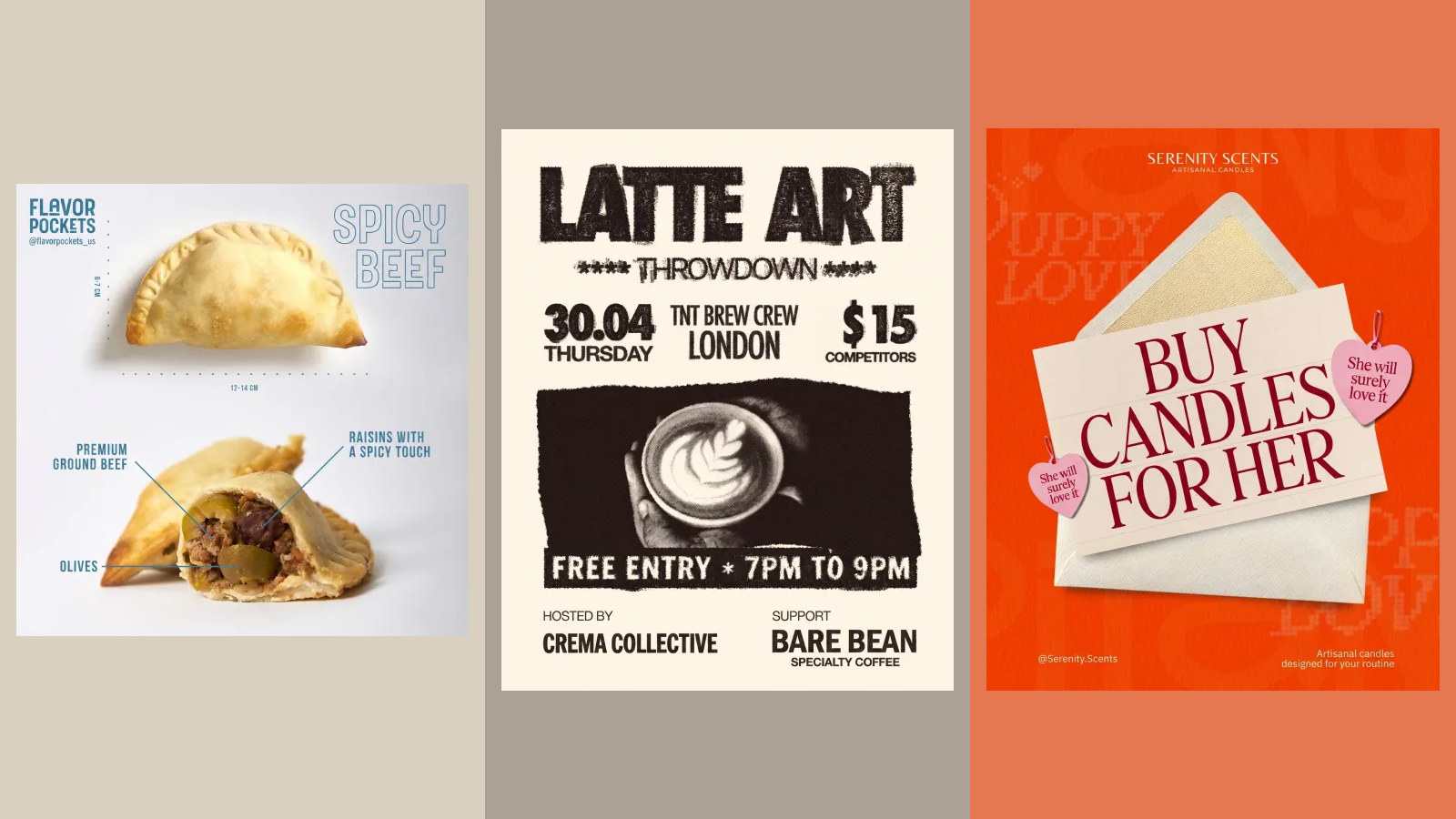
What to post on social media for a business comes down to six repeatable types, rotated: work you have finished, a question customers keep asking, something behind the scenes, a person on your team, a customer result, and an offer. That rotation is enough to fill a year without ever staring at a blank page, and it is the same answer whether the account is on Instagram, Facebook or LinkedIn. What changes between platforms is the format, not the material. To turn any of these into drafts without writing them yourself, prompt 3 gives you twenty ideas with the mix forced.
Our articles are still written by humans!
Get human written articles in your Google feed.
People assume they stop posting because they ran out of time. In our experience it is almost always that they ran out of ideas, decided nothing they do is interesting enough, and quietly gave up. Time is the excuse. The blank page is the cause.
Your ordinary work is the content
The most common mistake is thinking a post has to be advice. You are a plumber, so you feel obliged to write tips about pipes. But the thing people actually stop scrolling for is the bathroom you finished on Tuesday, photographed before and after. You already did the work. The post is documentation, not creation.

You are not short of content. You are short of the habit of photographing what you already do.
Six post types that keep working
- Finished work. Before and after, or just the result, with one line about what the customer wanted.
- The question you answer every week. If three customers asked it, three hundred people are wondering it.
- Behind the scenes. Setup, preparation, the unglamorous part. This consistently outperforms polished content because it feels real.
- A person. Who does what, and one human detail. People follow people far more readily than logos.
- A customer outcome, told as a short story rather than a testimonial graphic.
- The offer. Say plainly what you sell and how to buy it. Roughly one post in five, not one in two.
| Post type | Where the material already is | Out of twelve posts |
|---|---|---|
| Finished work | A job, order or project you completed this week | 3 |
| The recurring question | Anything a customer has asked you twice | 3 |
| Behind the scenes | Setup, preparation, the unglamorous half | 2 |
| The offer | What you sell and how to buy it | 2 |
| A person | Whoever a customer will actually speak to | 1 |
| A customer outcome | A result, told as a short story | 1 |

How to get a month ahead in one afternoon
Batching beats daily inspiration, because deciding what to post is the expensive part and doing it once is much cheaper than doing it twenty times. Set aside two hours and work through the rotation rather than trying to be creative on demand.
- Open your camera roll and your invoices from the last two months. That is your raw material.
- Write down every question a customer asked you recently. Each one is a post.
- Photograph three jobs, products or spaces properly, in daylight.
- Draft against the six types above rather than freestyling.
- Schedule them, then stop thinking about it until next month.

Where to look when the rotation runs dry
Social media content ideas for a small business are a sourcing problem, not a creativity problem. When people say they have run out, what they mean is that they are trying to think of something rather than trying to find something. There are five places the answer is always sitting, and none of them require an idea.
- Your camera roll from the last month. Every photograph you took for a practical reason, an order going out, a part that failed, a room before you started, is a post you have already half made.
- Your sent folder. Any answer you have typed twice to two different customers is a post, and you have already written it once.
- Your invoices. They are a list of everything you actually did, in order, with dates. It is the least romantic content calendar in the world and it never lies to you.
- Your reviews. Customers describe the thing you sell in the words other customers search with, which is why reviews are the best raw material for anything meant to be found rather than scrolled past.
- The next date on the calendar that changes what a customer should do. A closure, a deadline, a season, a delivery day. Not a national holiday nobody has an opinion about.
What changes between Instagram, Facebook, LinkedIn and TikTok
The six types are the material and the platform decides the packaging. This is the part most advice gets backwards, telling you to make different content for each channel when what you actually need is the same content shaped four ways. A finished job is a finished job. What differs is whether it leads with the photograph, the person or the practical detail.
- Instagram. The photograph carries the post and the caption supports it. The profile grid is what a stranger judges you on, so the first nine matter more than any single post, which is the argument in the first Instagram post for a business. Day to day material that is not worth a permanent square goes in a Story instead, and the long list of what to put in the squares is in Instagram post ideas for a small business.
- Facebook. Longer captions survive here in a way they do not on Instagram, and the practical detail does most of the work: hours, closures, events, availability, the answer to a question asked in a local group. It is the channel where being useful beats being polished by the widest margin.
- LinkedIn. The person outperforms the company page, consistently, and the recurring question type outperforms everything else. Post as yourself about work you did, not as the business about the business. What the feed actually ranks is worth reading before you spend much effort here.
- TikTok and Reels. The first three seconds decide it, so the behind the scenes and finished work types translate best and the offer type translates worst. Show the thing happening rather than describing it, and start from a prompt if writing the hook is the blocker.
- Whatever you post, put the same material somewhere you own as well. A channel you rent can change its rules on a Tuesday, and the businesses that came through every algorithm change of the last decade are the ones whose best answers also lived on their own website.
What we would not tell you if we were only selling
We build a tool that reads your website and drafts posts for you, and it genuinely removes the blank page. What it cannot do is take the photograph of the work you finished on Tuesday. The businesses that get the most out of any content tool, ours included, are the ones that spend two minutes a week capturing raw material. Software can write about your business. It cannot see it.
One caveat on the rotation above. If you are in a regulated profession, two of the six types come with rules attached, because a customer result and a piece of finished work are exactly what your regulator has written about. We have gone through what that means in practice for accountants, for law firms and for dental practices. The good news in all three is the same: the four unregulated types are also the ones that bring in the work.
Frequently asked questions
What should a business post on social media?
Six repeatable types, rotated: finished work, a question customers keep asking, something behind the scenes, a person on your team, a customer outcome, and an offer. Across a month of twelve posts that divides roughly into three, three, two, one, one and two. The same six work on every platform; only the format changes.
What should a small business post about when it has run out of ideas?
Stop trying to think of something and go and find something. Your camera roll from the last month, your sent folder, your invoices, your reviews and the next date on the calendar that changes what a customer should do. One of those five always has a post in it.
How do I come up with social media content ideas for a small business?
Work from sources rather than themes. Every job you finish, every question a customer asks twice, and every date that changes what somebody should do is a post you do not have to invent. Decide a month of them in one sitting, because deciding is the expensive part, not posting.
How do I post if my business is not visually interesting?
Almost every business is more visual than the owner thinks. Preparation, tools, workspaces, before and after, and people all photograph well. Polished content usually performs worse than something that looks real.
How often should I post a sales or offer post?
Roughly one in five. Posting only offers trains people to scroll past you, and posting none leaves them unsure what you actually sell or how to buy it.
Is it better to batch content or post daily as ideas come?
Batch. Deciding what to post is the expensive part, so doing it once for a month is far cheaper than repeating that decision every day, and it survives busy weeks.
How we researched this
- The six post types are not a framework we invented for an article. They are the categories our own generator was eventually reduced to after we tried to make it write for businesses across trades, food, property and professional services from their websites alone. Categories that only worked for one kind of business were removed until these were what was left.
- The claim that businesses go quiet from lack of ideas rather than lack of time is our read of what we see in onboarding, and it is stated as that. We have not run a survey and do not pretend to have one.
- Where this piece touches on how often to post, it defers to the article that carries the data rather than repeating a number here.
- Nothing in this article requires our product. The rotation works in a notebook.
Sources


