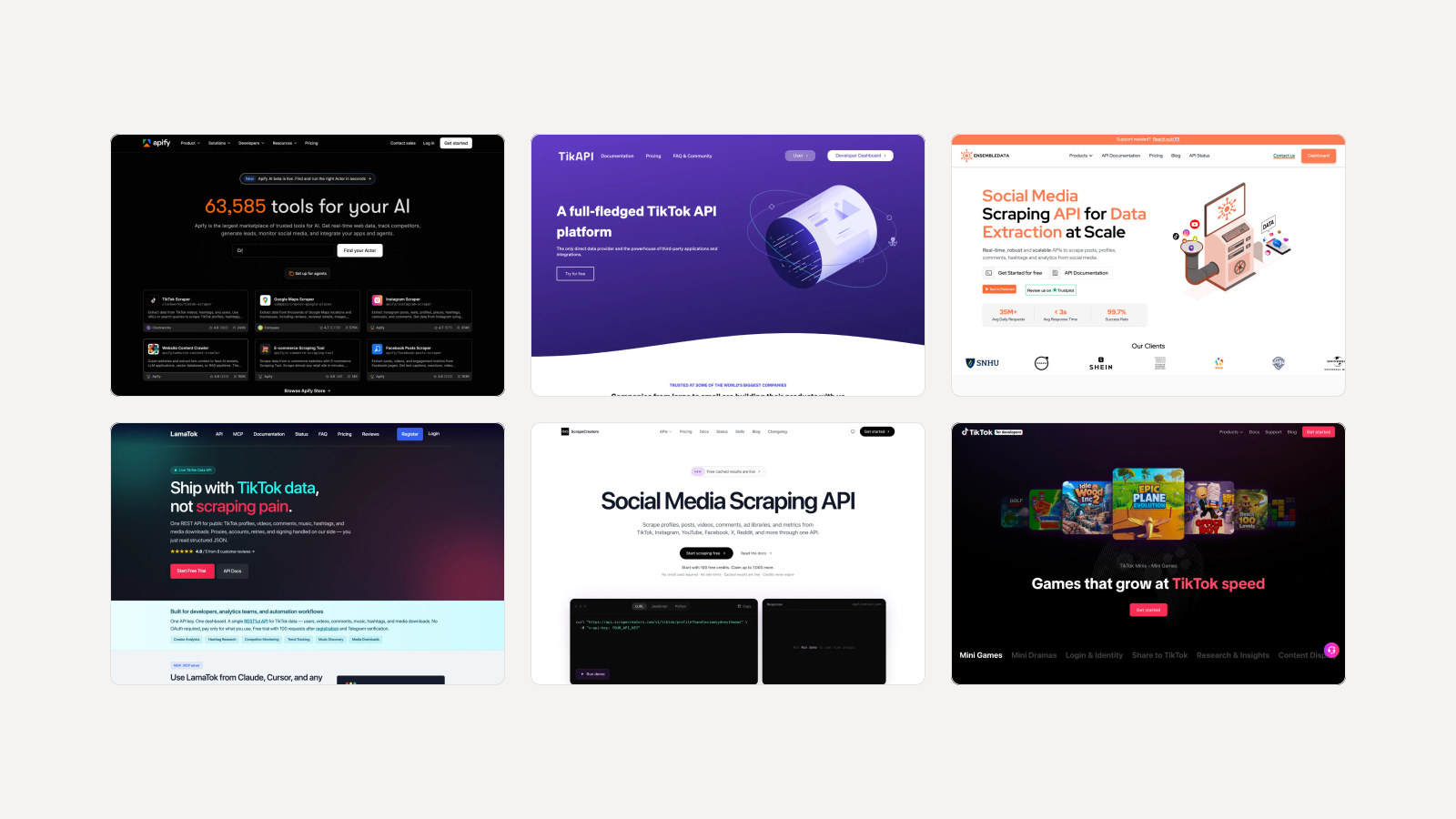
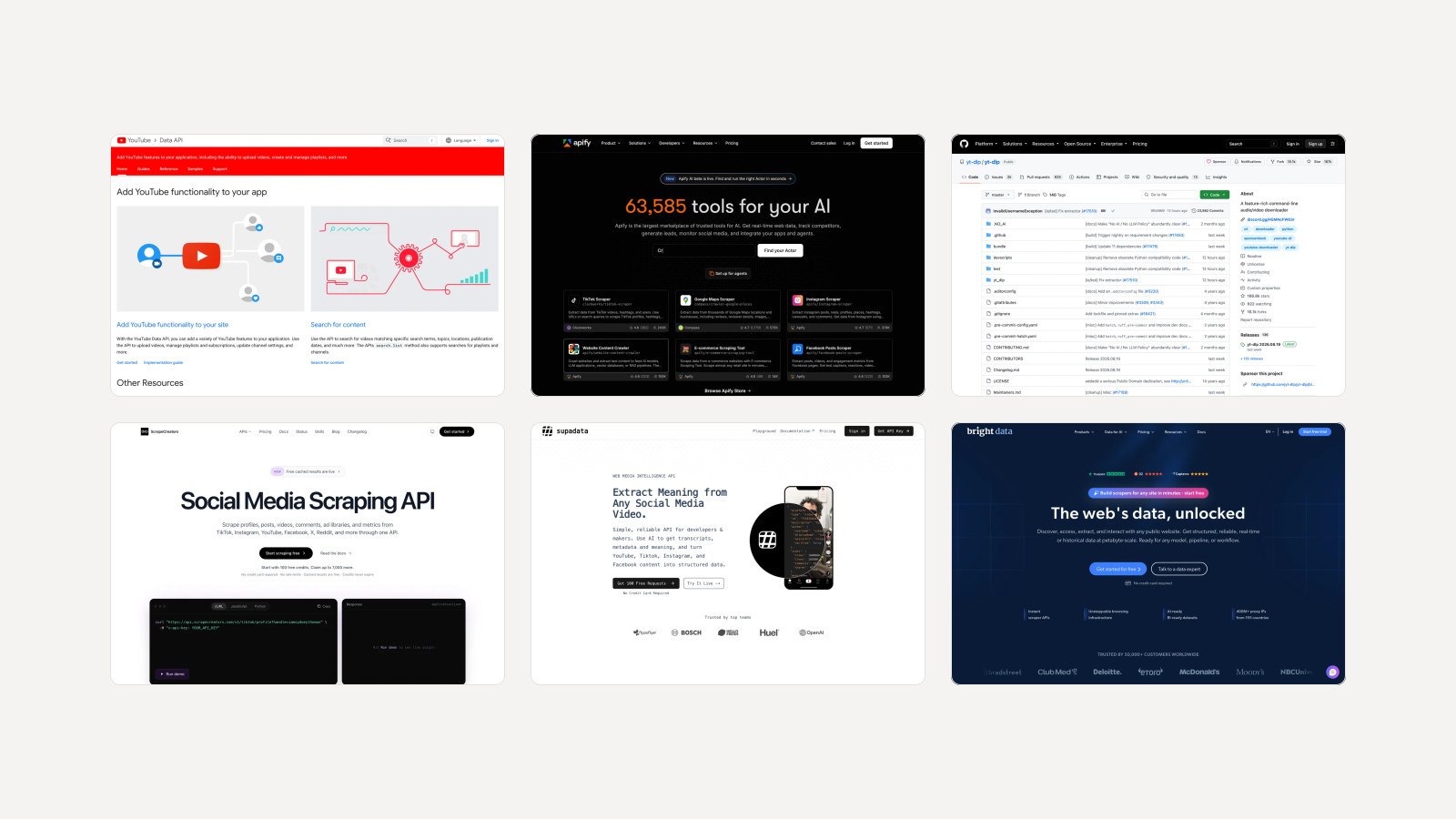
The best Instagram scrapers, ranked
Nine tools that pull public Instagram data, ranked on what you actually pay, what breaks, and how much of Meta's rewritten terms you end up standing on.
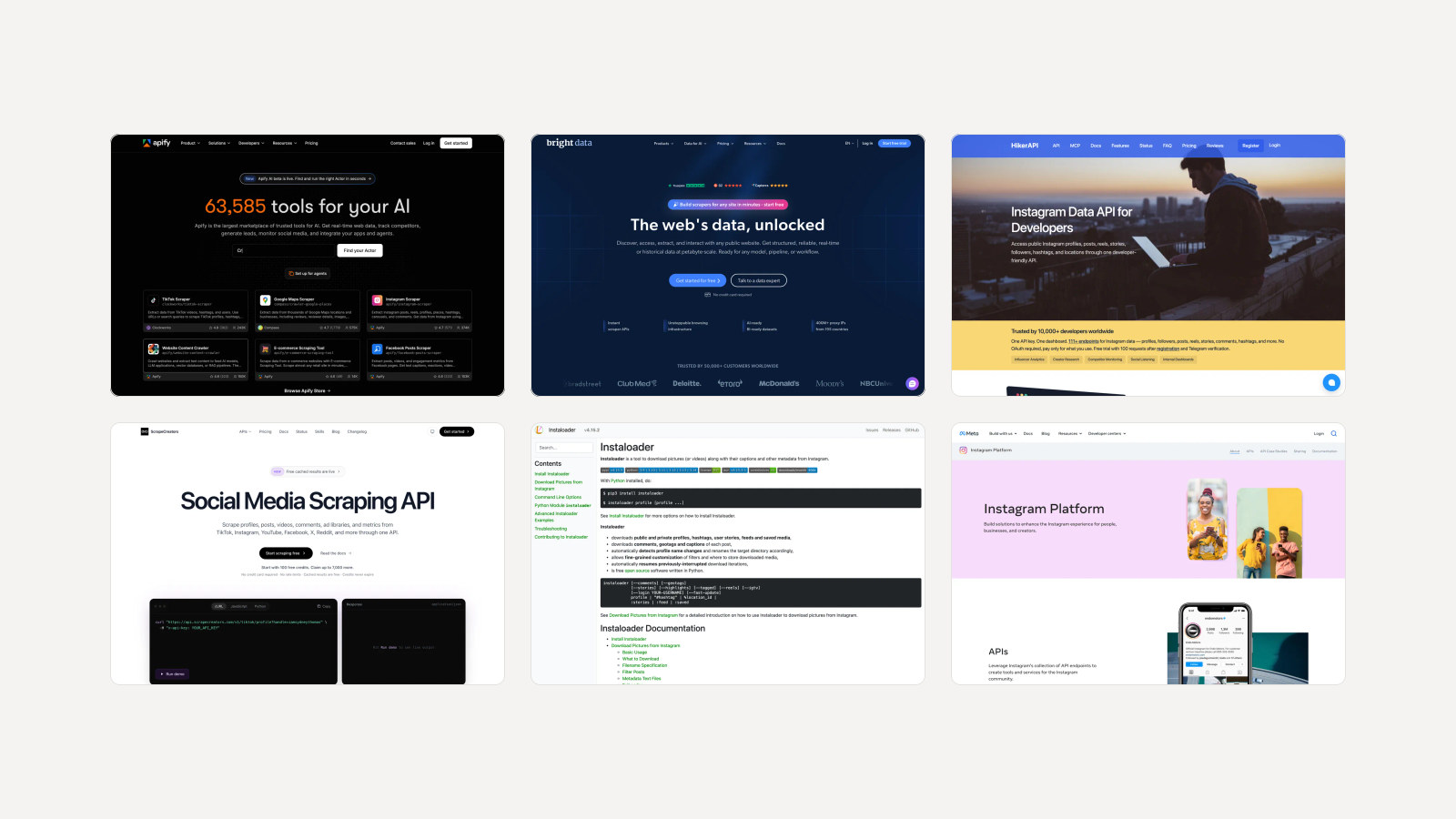
Every product on this page sells the same thing in a different wrapper: public Instagram data, delivered as JSON, without Instagram's involvement. What separates them is not really features. It is who carries the risk, who eats the breakage when Meta ships a change on a Tuesday, and whether you can work out the bill before you run the job.
Our articles are still written by humans!
Get human written articles in your Google feed.
The fact that reorganises the whole list
Most Instagram scraper round-ups still cite the same reassurance: in January 2024 a federal court in California granted Bright Data summary judgment against Meta, on the reasoning that somebody scraping while logged out is not a user and so is not bound by the terms a user accepts. That was a real result and it genuinely changed the industry.
It is also the part of the story that stopped being current. Meta changed the contract. The Instagram Terms of Use now say you cannot create accounts or access or collect information in an automated way without express permission, and then add the clause that exists solely because of that ruling: "regardless of whether such automated access or collection is undertaken while logged-in to an Instagram account". Logging out is no longer an answer to the question, because the sentence now names logging out.

Underneath sits a second document most people have never opened. The Automated Data Collection Terms, effective 7 October 2024, say permission "must be obtained separately through Meta's formal authorization process", and then restrict what you may do with anything you collect to providing results for your search engine, showing previews of Meta URLs, or whatever else Meta has specifically permitted in writing. Everything else is prohibited, "including, but not limited to, transferring, selling, licensing or sublicensing Collected Data".
Read those two documents together and the honest summary is that this entire category operates against Meta's stated terms, and prices itself accordingly. Every vendor below knows this. Some say so.
None of that is legal advice and none of it is a prediction about enforcement. Meta's practical remedies against a small buyer are blocking and account action rather than a lawsuit, and the vendors are the ones with the exposure. But it changes what a compliance badge on a landing page is worth, and it is why the ranking below counts distance from your own account as a feature. The clauses behind all of this, on every platform rather than only this one, are quoted whole in is scraping social media legal.
What ranked means here
Five questions, applied to all nine in the same order. They are weighted roughly in this order too, so a tool that wins on price and loses on the first two ends up mid table.
- Does somebody else run the fragile part? Proxies, retries, and the parsing that breaks when Instagram renames a field.
- Can you price the job before you run it? A per result number can be multiplied by hand. A per gigabyte number cannot, because you do not know how many gigabytes a profile is until you have fetched it.
- How close does it put you to your own account? Nothing, a pool of somebody else's accounts, or your own session cookie are three very different amounts of risk wearing the same word.
- What happens when it breaks? Published success rates, a status page and a changelog are worth more than a feature list.
- Can you leave? Plain JSON out and credits that do not expire beat a platform you have to model your pipeline around.
| Rank | Tool | What you pay for | Where it stops |
|---|---|---|---|
| 1 | Apify | Per result, published per actor | A marketplace, so quality varies by who wrote the actor |
| 2 | Bright Data | Per record, plus proxy plans | Enterprise sales motion around a self serve price |
| 3 | ScrapeCreators | Per credit, credits never expire | Small team, so the bus factor is real |
| 4 | EnsembleData | Monthly plan, daily unit cap | You cannot burst past the daily cap |
| 5 | Decodo | Per request or per GB, depending | Proxy house first, scraper second |
| 6 | Oxylabs | Per result or per GB, enterprise tiers | Priced and sold for volume you probably do not have |
| 7 | HikerAPI | Per request, from $0.60 per 1,000 | Depth that only comes from logged in accounts |
| 8 | Instaloader | Nothing, it is free software | Your IP address is the proxy pool |
| 9 | PhantomBuster | Per seat, per month | Has moved to sales prospecting, and drives your own account |
| Not ranked | Instagram Graph API | Nothing | Only reaches accounts that authorised your app |
1. Apify

Apify is a marketplace of hosted scrapers, which it calls Actors, and its front page now counts them in the tens of thousands under the line "tools for your AI". That repositioning is worth noticing, because it tells you where the roadmap points, but for this job the relevant fact is narrower and better: the Instagram Scraper is published by Apify itself rather than by a third party developer, and on the day we checked it showed 374,322 total users, a 4.73 rating and a 100% run success rate on its own page.
Pricing is per result, from $2.70 per 1,000 on the free plan down to $1.50 on the larger ones. That is not the cheapest number on this page and it is the easiest to reason about: one scraped post is one result, so a job over two hundred profiles at twelve posts each is 2,400 results and you can do that multiplication before you spend anything.
The catch is structural to marketplaces. Most Actors are not Apify's. Pick one for a platform where Apify has not published a first party option and you have taken a dependency on an individual developer's spare time, with Apify's billing wrapped around it. For Instagram specifically that catch does not apply, which is most of why this is first.
2. Bright Data

The largest company in this category and the one that took Meta to summary judgment and won. Its Instagram scrapers are sold per record, at $1.50 per 1,000 pay as you go, with 5,000 records a month free and no card required, which is a genuinely generous way to find out whether the data is shaped the way your spreadsheet needs.
It is second rather than first for two reasons. The self serve price sits inside an enterprise sales motion, so past the free tier you are in conversations about plans. And its compliance language, that the scraper is "designed to comply with data protection regulations, including GDPR and CCPA", is a statement about how Bright Data operates, not a shield that transfers to you. Under GDPR the person deciding why the data is collected is the controller, and if you are the one commissioning the job, that is you.
3. ScrapeCreators

The developer's pick, and the one most likely to be the right answer if you are writing the code yourself. One API key in one header, thirty seven platform APIs behind it, 100 free credits to start and up to 7,000 more claimable, credits that never expire, no account level rate limit, and cached results billed at zero. On the day we checked, its own front page claimed 10 million requests a day at a 98.2% success rate and a 3.12 second average response.
The reason it is third and not first is on its own FAQ, which lists the question "Are you a one-man company?" because enough people ask it. The team is small and ships fast, and those are the same fact seen from two sides. For a weekend project that is a feature. For something you will still be running in two years, price in the possibility that you are the maintenance plan.
4. EnsembleData

Eight platforms behind a unit based API, priced as monthly plans from $100 to $1,400 with a free tier of 50 units a day. Units are the interesting part: one unit buys ten posts from a user or thirty comments on a post, so the cost of a job is knowable, but the cap is a daily one. That suits a dashboard that pulls a steady trickle and suits a one off backfill badly, because you cannot buy your way past today's limit by paying more today.
It earns its place with the plainest answer on this page to the question everyone actually has. Asked whether it extracts private information, its own pricing page says it scrapes neither private nor sensitive data and does it "without using fake accounts". Whether or not you accept the compliance claim attached to it, that is a specific, checkable statement about method, and it is the opposite of what two products further down this list are selling.
5. Decodo

Decodo, until 2025 called Smartproxy, is a proxy business that has grown a scraping API on the side, and the ordering matters. The proxies are good, the social scraping endpoints are a layer over them, and the pricing reflects a company whose meter has historically measured traffic rather than rows. If your problem is that you already have a scraper and it is getting blocked, this is a strong answer. If your problem is that you have no scraper, you are buying a component and doing the assembly.
6. Oxylabs

The same shape as Decodo at a larger size: a very serious proxy network with scraping products built over it, sold to companies with a data team. Everything about the site, from the 177 million proxy counter to the talk to a data expert button next to the free trial, is addressed to a buyer with volume. If that is you, it belongs several places higher. If you wanted four hundred profiles once, this is a procurement process wearing the costume of a signup form.
7. HikerAPI

By raw coverage this is the most capable Instagram API on the page, and it is seventh precisely because of how it gets there. Its own structured data describes it as an "Unofficial Instagram REST API" with over a hundred endpoints, no OAuth, no rate limits and a price from $0.60 per 1,000 requests, which is several times cheaper than anything above it. It offers profiles, posts, reels, comments, hashtags and locations, and then it offers stories, followers and following lists.
Those last three are the tell. Instagram does not serve a complete follower list or a story to a logged out request, so anything returning them is fetching them as somebody. That is not an accusation, it is arithmetic, and it is why the free trial is a hundred requests granted after "registration and Telegram verification" rather than a card. Everything the section above says about Meta's terms applies here at full strength, and the account exposure is somebody else's until the day the endpoint you built on goes quiet.
8. Instaloader

Instaloader is free open source Python that downloads posts, captions, comments, geotags and metadata from the command line, and it is genuinely excellent software. For a one off pull of one competitor's last two hundred posts onto your own laptop, it is the correct tool and every paid entry above it is overkill.
It is eighth on this list because the list is ranked on who runs the fragile part, and here that is you. No proxy rotation, no retry queue, no status page, and your own IP address making every request. It also downloads private profiles you are logged in to and saved feeds, which means the same install can be used well inside the line and well outside it depending on the flags you pass. Free is not the same as low risk, and this is the entry where that distinction bites hardest.
9. PhantomBuster

PhantomBuster spent years as the default answer to this question and has spent the last two leaving. Its home page now reads "Warm Leads. Every Day." over a B2B prospecting product, its solutions list is LinkedIn, Sales Navigator, Google, Instagram, Meta and X, and there is no TikTok in it at all. The Instagram automations still exist, so this is not a dead entry, but you would be buying it against the direction of travel.
The more important reason it is last is what those automations are. Alongside Instagram Follower Collector sit Instagram Followers Auto Follow, Instagram Auto Follow and Instagram Auto Commenter, which do not read anything: they act, as you, from your session. That is the one thing on this entire page with a well documented consequence, and the consequence lands on your account rather than on a vendor's proxy pool. If you want the follower list, take it from something in the top half. If you want the auto follow, please read why AI posts sound like AI first and then consider not.
The official API, which is the answer to a different question
It is worth being exact about what Meta does offer, because a lot of people go looking for a scraper without checking. The Instagram Platform APIs reach Business and Creator accounts that have authorised your app: their media, insights, comments, mentions and hashtagged media. There is a business discovery call that returns basic public data about other professional accounts, and it is deliberately basic.
What there is not, and has never been, is a call that reads an arbitrary account's posts because they are public. If you manage accounts for clients and they can click authorise, the official API is free, stable, supported and the obvious choice. If your use case starts with a list of handles who have never heard of you, the official API cannot help you and no amount of reading the docs will change that. That gap is the entire market above.
Reading versus acting, which is the line that matters
Strip the marketing off and there are three postures in this list, and they carry three different risks that the word scraping flattens into one.
- Fetching pages nobody is logged in to. Apify, Bright Data, ScrapeCreators, EnsembleData, Decodo and Oxylabs mostly live here. The exposure is a terms problem for the vendor and a blocking problem for you.
- Fetching through a pool of accounts. Stories, complete follower lists and anything requiring a session come from here. The exposure is somebody else's accounts until the endpoint disappears, and the disappearance is the risk you are actually buying.
- Acting through your account. Auto follow, auto comment, auto DM. The exposure is your account, your handle and the audience you spent three years building.
The first is a business decision. The second is a supplier risk. The third is a bet on your own asset with a poor payout, and it is the one we would talk anybody out of. If the goal was ever engagement rather than data, the boring version works better and is covered in how often a small business should post and what to post about.
The four shapes a bill comes in
Comparing prices across this page is harder than it looks, because the vendors are not selling the same unit. There are four meters in use and only two of them can be estimated in advance.
| Meter | Who uses it | Can you estimate the job? |
|---|---|---|
| Per result or record | Apify, Bright Data | Yes, multiply rows by the rate |
| Per request or credit | ScrapeCreators, HikerAPI, EnsembleData units | Yes, once you know the rows per call |
| Per gigabyte of traffic | Proxy plans at Decodo, Oxylabs | No, not until you have run it once |
| Per seat per month | PhantomBuster | Only if the seat's limits are the binding constraint |
Before you buy any of it, work out if this is a once
The uncomfortable question at the end of every one of these round-ups is what the data is for. There are good answers. Competitor benchmarking before a rebrand, sizing a niche before you commit a year to it, building an influencer shortlist you will actually contact, feeding a product that genuinely needs social data. All of those are real, and for all of them something in the top four here is the right purchase.
There is also a very common bad answer, which is that posting has stalled and gathering data feels like progress. Nine hundred rows of a competitor's engagement figures is a satisfying afternoon and it does not put anything on your feed on Thursday. If that is closer to the truth, the honest recommendation is to spend the afternoon on Instagram post ideas instead, and if the real problem is that nothing gets published at all, the tools that address that are a different category entirely and are compared in the best AI social media tools.
The same three questions come up for the other two platforms, with different answers, because TikTok's official research API excludes commercial use outright and YouTube's API cannot tell you what a Short is. Those are the TikTok scrapers and the YouTube Shorts scrapers. What you do with the data once you have it is a separate question from when you publish the result, and on TikTok the four big studies of that disagree with each other more than anyone quoting one of them lets on.
Frequently asked questions
Is scraping Instagram legal?
Collecting public data is not automatically a crime in the US, and a federal court sided with Bright Data against Meta in 2024 on logged out scraping. That is separate from Instagram's terms, which now forbid automated collection whether or not you are logged in, and from data protection law, where you are the controller of any personal data you collect. Take advice for your own case rather than a vendor's badge.
What is the best free Instagram scraper?
Instaloader, if you can run a Python command line tool. It is free, open source and pulls posts, captions and comments to your own machine. The trade is that your own IP address makes every request and there is nothing between you and a block.
Can I scrape Instagram with the official API?
No, not in the sense people mean. The Instagram Platform APIs reach Business and Creator accounts that have authorised your app, plus basic details about other professional accounts through business discovery. There is no official call that returns an arbitrary public account's posts.
How much does an Instagram scraper cost?
Per result pricing runs from about $1.50 to $2.70 per 1,000 records at Apify and Bright Data. Per request APIs go lower, from around $0.60 per 1,000 at the unofficial end. Proxy based products are priced per gigabyte instead, which cannot be estimated before you run the job.
Will scraping get my Instagram account banned?
Fetching public pages from a vendor's infrastructure does not involve your account at all. Tools that act as you, such as auto follow or auto comment, absolutely can, and that is the category with the well documented consequences. Keep the two apart when you evaluate anything sold as automation.
Which Instagram scraper is best for competitor research?
For a one off, Apify's Instagram Scraper or Bright Data's free monthly record allowance will both do it without a subscription. If you are writing the code and want it cheap and simple, ScrapeCreators. If you never want to write code at all, run the Apify actor from its own dashboard and export the spreadsheet.
How we researched this
- The nine are the ones a developer or a marketer actually ends up shortlisting: the products that come back repeatedly in search results for Instagram scraping, plus the free tool everyone tries first and the official API everyone assumes exists. Every home page shown here was opened and captured on 25 August 2026, and every pricing and terms page cited below was read by hand the same day.
- The rank order answers one question and not the general question of which product is best. The question is: if you need public Instagram data and you are not a platform partner, which of these gets it to you at a price you can work out in advance, without you personally running the part that breaks, and without standing further into Meta's terms than you have to. A tool can be excellent and rank low here because it answers a different question. Instaloader and the Graph API both do.
- Prices are given where the vendor publishes a per unit number that is structural to how the product works, because the shape of the price is the thing being compared. They are not given as a table of monthly plans. Every vendor here repackages more often than we can revise an article, and each entry links to its own pricing page.
- We did not run all nine against the same target profile and count the rows. Round-ups that imply they did usually did not, and a single side by side run on a single day would tell you about that day rather than about the product. What is checked here is what each vendor publishes, what its terms and the platform's terms say, and what shape the failure takes when it fails.
Sources