How to write a brand voice guide your AI can actually follow
Most brand voice documents are three adjectives and a mood board, which is why no writer and no model can work from them. Here is the one page version that survives contact with an AI.
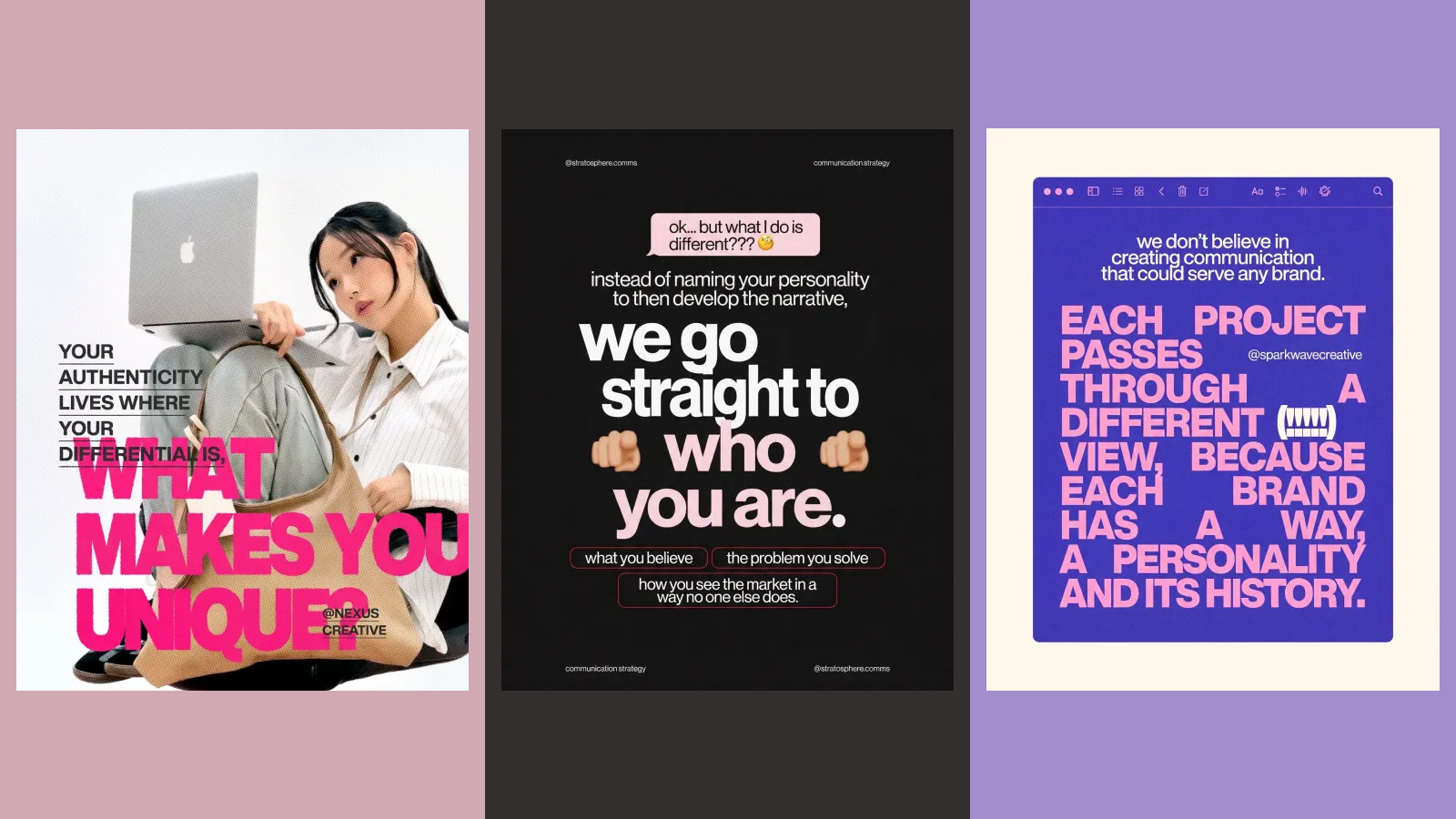
Almost every brand voice document ever written contains the words friendly, professional and approachable. It is a useless sentence, and you can prove it in ten seconds: think of a business whose voice those three words do not describe. Nobody sets out to sound hostile, amateurish and remote. A description that excludes nothing has told a writer nothing, which is why the document gets made once, admired, filed, and never opened by the person who actually has to write Tuesday's post.
Our articles are still written by humans!
Get human written articles in your Google feed.
This has become a practical problem rather than a branding one, for a reason that did not exist three years ago. A voice guide used to be an instruction to a human being who could fill the gaps with judgement. Now it is also, for most businesses, the input to a language model, and a model fills gaps with the average of the internet. Feed it "friendly and professional" and you will get exactly that, which is the specific flavour of nothing that makes AI posts sound like AI.
Why most voice documents fail
They fail because they describe an impression rather than a behaviour. An impression is what a reader is left with. A behaviour is what the writer does with their hands. "Warm" is an impression. "We use the customer's first name and never the word valued" is a behaviour. Only the second one changes a sentence.
The test we use is whether a section could be disobeyed. If there is no way to violate a rule, it is not a rule. You cannot fail to be approachable, so nobody can be corrected against it, so it does no work. You can absolutely fail to keep sentences under twenty five words, and the failure is visible to anyone.


The six sections that earn their place
This is the whole structure. Six headings, roughly a page. Longer than this and you have written something for a brand agency to present rather than something for a person to write from.
| Section | What goes in it | How long |
|---|---|---|
| Who we are talking to | One named, specific person and what they are worried about | Two sentences |
| What we sound like | Four positions on the four spectrums, with a reason for each | Four lines |
| Words we use | The nouns and verbs of the trade, spelled the customer's way | A list |
| Words we never use | The jargon, the marketing filler, the things that are not us | A list |
| Three sentences that are us | Real sentences, lifted from real writing | Three lines |
| Three sentences that are not | Plausible near misses, with a note on why each fails | Three lines |
Who we are talking to
Not a demographic. A person with a problem, described in one specific sentence. "Women 25 to 45 interested in wellness" is a media buying instruction and it will produce media buying prose. "Someone who has had lower back pain for two years, has been told to do pilates by a physiotherapist, and is quietly worried they will be the least fit person in the room" is a person, and you can hear the difference in the first caption written for each.
What we sound like
This is where adjectives usually go and where spectrums should go instead. Nielsen Norman Group's research identifies four dimensions of tone: formal to casual, serious to funny, respectful to irreverent, and matter of fact to enthusiastic. Put yourself on each one, and write one clause explaining why. The explanation is the load bearing part.
- Casual, but not chatty. We are talking to somebody in pain and jokes read as not listening.
- Mostly serious. One dry aside per post is the ceiling.
- Respectful, firmly. Our customers have been patronised by the fitness industry for years.
- Matter of fact. Enthusiasm about our own service is the fastest way to sound like an advert.
Four lines, and a stranger could now write in your voice. Compare that to friendly, professional and approachable, which took the same amount of ink.
Words we use, and words we never use
The banned list is the single most useful thing in the document and it takes fifteen minutes. Two kinds of entry go in it. First, the marketing filler nobody says out loud: elevate, unlock, seamless, journey, game changer, in today's fast paced world. Second, and more important, the words that are correct English but are not you. A funeral director does not say excited. A structural engineer does not say vibes. A children's nursery does not say scalable.
The words you do use matter for a second reason that has nothing to do with tone. They are the words your customers type into a search bar, and getting them into your captions is most of what social media SEO actually is. A voice guide that standardises on the customer's word rather than the trade's word is doing two jobs at once, which is why writing one is worth an afternoon.
Six real sentences
Three that are you, three that are not. Take the three good ones from something you have already written, ideally an email to a customer rather than anything that has been through a marketing process. Then write three near misses, the kind of thing an agency would produce for you, and add a clause under each explaining what is wrong with it. That clause is worth more than the rest of the page put together, because it is the only place the document says something surprising.
Write it from what you already say
The worst way to produce a voice guide is a meeting where people describe how they would like to sound. That produces aspiration, and aspiration is the reason every one of these documents ends up saying the same three adjectives. The best way is archaeology. You already have a voice. It is in the things you wrote when you were not trying to have one, which is the same raw material a tool reads off your website when it does this automatically.
- Your sent mail. Find three replies to customers you were pleased with. That is your voice with the marketing switched off.
- The way you answer the phone. Write down the first sentence you say. Most businesses have one and have never noticed it.
- Your one star review replies, if you have any. Nothing exposes a real voice faster than being annoyed in public and having to stay decent.
- The explanation you have given three times this month. You have already tuned it by watching faces.
Handing it to an AI
Paste the whole page in. Not a summary of it, and not the three adjectives version. If you are using ChatGPT, put it in a project's custom instructions so it applies to everything; the same applies to a Gem in Gemini or a project in Claude, and we have written the mechanics of each in our ChatGPT prompt guide, the Gemini one and the Claude one.
Then expect the banned words list to be the part that does the work, and expect to keep adding to it for a month. Every time the model produces a word that made you wince, that word goes on the list. After about twenty additions the wincing mostly stops, and most of what goes on that list is the same handful of tells that make AI writing recognisable. This is the least glamorous and most effective part of the whole exercise, and it is also why the list should live somewhere you can edit in ten seconds rather than in a PDF a designer made.
Test it in three minutes
Write three captions yourself. Have the model write three from the guide. Shuffle all six, hand them to somebody who knows the business and did not write any of them, and ask which three are the machine's.
If they get all six right, the guide has not transferred anything and you should look at what they used to tell them apart, because that difference is exactly the thing your guide failed to describe. If they get about half right, you are done. If they get them all wrong, check that your own three were not written in a hurry.

The reason this test works is that it measures the only thing that matters, which is whether a reader can tell. Everything else is self assessment, and everybody grades their own voice generously. It is the same instinct behind Google's own guidance for web content, which asks whether a thing was written by somebody who demonstrably knows the topic rather than whether it hits a keyword. A voice guide is how you make demonstrable survive being written by someone, or something, other than you.
What a voice guide cannot do
It cannot give you something to say. Voice is how you sound, not what you know, and a perfectly calibrated document applied to an empty content calendar produces beautifully worded nothing. If that is the actual problem, what should a small business post about is the piece you want instead.
It also cannot make an inconsistent business sound consistent. If three people write your posts and none of them agree on what you do, a voice guide will document the disagreement in nice fonts. Fix the disagreement first. The document is a way of preserving a decision, not a way of making one. Once it is written, the place it pays off fastest is the weekly review, which we have described as a five minute routine.
Frequently asked questions
What is a brand voice guide?
A short document describing how your business writes, in terms specific enough that someone else could follow it. The useful version is about a page and is made of behaviours and examples rather than adjectives.
How do I define my brand voice?
Start from things you have already written rather than from how you would like to sound. Pull three replies from your sent mail that you were pleased with, place yourself on the four tone spectrums, and write down the words you would never use. Aspiration produces the same three adjectives for every business.
What should a brand voice guide include?
Six sections: who you are talking to, where you sit on the four tone dimensions, words you use, words you never use, three real sentences that are you, and three near misses that are not, each with a note on why it fails.
Why do brand voice documents say friendly and professional?
Because those words are written from aspiration rather than observation, and no business aspires to sound unfriendly. A description that excludes nothing cannot guide a writer. Ask instead what you would never say, which is a question with a real answer.
How do I train ChatGPT on my brand voice?
Paste the whole guide into a project's custom instructions rather than into a single chat, so it applies to everything. Then keep adding to the banned words list every time the output makes you wince. That list does more work than the rest of the document.
How long should a brand voice guide be?
One page. A longer document is a brand book, and brand books are made to be presented rather than used. The person writing Tuesday's post at seven in the morning will read one page and will not read eight.
How do I know if my brand voice guide works?
Write three captions yourself, have an AI write three from the guide, shuffle them, and ask somebody who knows the business to pick out the machine's. If they can tell every time, the guide has not transferred what matters. If they get roughly half, it has.
Is a brand voice the same as tone of voice?
Close enough for a small business, though the usual distinction is that voice is constant and tone shifts by situation. In practice you need one page, and the shifts are handled by the examples: a complaint reply and a launch post can both be in it.
How we researched this
- The structure below is the one we extract for every customer of our own product, reduced to the parts a person can write by hand. We build a system that reads a business and infers its voice, so we have seen several hundred of these, and the six sections here are the ones that changed the output. The sections we dropped are named in the article rather than quietly omitted, because a guide that tells you only what to include is hiding half of what it learned.
- The four dimensions used in the calibration section are not ours. They come from Nielsen Norman Group's research on tone of voice, published by Kate Moran in 2016 and last reviewed in 2023, and they are linked below. We use them because they are spectrums rather than labels, and a spectrum is something two people can disagree about precisely.
- The blind test at the end of the article is a real procedure we run, not an illustration. It is deliberately cheap and slightly humiliating, which is the point: a voice guide that cannot survive it was decoration.
- We sell a tool that does this inference automatically. That is disclosed in the article at the point it becomes relevant, and the honest answer for most readers of this page is that an afternoon and a text file is enough.
Sources