Social media for veterinarians: the best material in medicine, and the comment you cannot answer
A veterinary practice has the most engaging content of any healthcare business and the tightest rule about replying to it. What to post from the consult room, why answering is my dog alright in a comment is a legal problem and not just a busy one, what a client's animal and a client's grief actually belong to, and how to say no in a way that books an appointment.
A veterinary practice has the best material in healthcare. The patients are photogenic, the clients want to talk about them, the outcomes are visible, and nobody has to be persuaded that a puppy is interesting. It is also the only local business we write about where the material's own success is the problem: a good post about a lump brings forty comments describing lumps, and every one of them is a question you are not allowed to answer. This article is about the posts worth making, and about the sentence that turns an unanswerable comment into an appointment.
Our articles are still written by humans!
Get human written articles in your Google feed.
What social media actually does for a practice
Two things, and they are worth different amounts than most practices assume. First, it wins the choice that gets made on a quiet day. Almost nobody chooses a vet in an emergency; they choose one when they get a puppy, or when they move, and then they stay for twelve years and four thousand pounds. That decision is made by looking at three clinic profiles and picking the one that looks like it is run by people who like animals, and it is decided in about ninety seconds. Second, it brings in the appointment that has been put off. A large share of the work a practice does not get is dental, lump checks and geriatric bloods that clients have been meaning to book for months. A post about what a dental actually involves and what it costs converts that hesitation better than any reminder letter.
What it does not do is bring emergencies, which arrive by phone or by ambulance, and it does not compete with the corporate group's advertising budget, which is fine, because nobody picks a vet on reach.
The six posts that bring an appointment
- The thing you are asked about most, explained properly. The lump people watch. The cough that matters. Why the cat stopped using the tray. You answer this eleven times a week in the consult room; answering it once in public is the highest value post a practice can make.
- What it costs. A dental, a spay, a vaccination course, an out of hours call. Price is the single biggest source of avoidance in veterinary medicine and the biggest source of anger at the desk. Publishing it does more for trust than any amount of warmth.
- The person. One vet or one nurse, named, with what they are good at and which days they are in. Clients are loyal to individuals and the practice inherits that loyalty.
- What happens on the day. Where to park, what time to arrive, whether to feed, how long you will have the animal, when you will call. It is the post that turns a dreaded procedure into a booked one.
- The seasonal thing, before the season. Ticks before the walks start, chocolate before the holiday, heat before the first hot weekend, fireworks four weeks before the night rather than on it.
- The patient, with the client's blessing. The dog with the bandage who is fine now. This is the post that gets shared, and it is the one to be most careful with, which is the section below.


The comment you cannot answer
This is the rule that makes veterinary social media different from every other vertical, and it is the one nobody warns practices about before they start. Post something useful about a lump and you will get photographs of lumps. Post about a cough and you will get videos of coughing. The questions are sincere, the clients are anxious, they are asking somebody they trust, and answering them is not a matter of time.
Clinical advice sits inside a veterinarian client patient relationship, and that relationship has a definition. The federal one, at 21 CFR 530.3(i), requires among other things that the veterinarian has sufficient knowledge of the animal to make at least a general or preliminary diagnosis, and that this knowledge exists because the veterinarian has recently seen and is personally acquainted with the keeping and care of the animal by virtue of examining it, or by medically appropriate and timely visits to where it is kept. The FDA states plainly that the federal definition cannot be met through telemedicine alone. That federal definition governs extralabel drug use and feed directives rather than the whole of practice; the definition that governs a comment on your Facebook post is your state practice act's, and every version of it turns on the same thing, which is that somebody has actually looked at the animal.
So a comment saying my dog has a lump like that, is it alright, is a question you cannot answer, and the reason is not that you are covering yourself. It is that you genuinely cannot tell, and the person asking believes you can, which is the actual danger. A reassuring reply to a photograph of a mast cell tumour is worse than no reply at all.
The reply that works is not a refusal and does not read like one. It has three parts: what would need to happen to answer, how fast, and how to do it. "I cannot tell from a photograph, and with lumps the thing that matters is whether it has changed. It is a ten minute appointment and a needle sample, we have space this week, call the desk and say I sent you." That is a better answer than a guess, it is completely lawful, and it converts, which the guess never does. Put it in a saved reply and give it to whoever runs the page, because the person answering comments at eight in the evening is often not a vet, and that is the actual risk in the whole arrangement.

The animal is somebody's, and so is the story
There is no HIPAA for animals, which is what practices usually get told, and it leads to the wrong conclusion. The absence of a federal privacy statute does not mean the material is yours. The animal is the client's property, the treatment is a record they paid for, and the story is theirs in every sense that matters to them. Practices post the good ones freely and then discover the edge of it in the worst possible case.
Ask, and ask specifically. A yes to a photograph of a dog in a bandage is not a yes to the case being described, and neither is a yes to it appearing in an advertisement six months later. Keep the client's name out unless they offered it. Be careful with anything that reveals a decision the client might be judged for, which in practice means cost, delay and euthanasia, the three things clients feel most defensive about. And the specific one worth writing down: the animal that died is their grief, not your content. Practices post beautiful, well meant memorial posts about patients whose owners have not told their own children yet.
The reverse, the client's own words about you, is easier and has one rule. If nothing changed hands, a testimonial you asked for and were given is straightforward, and the FTC's endorsement guidance is only interesting once something did: a discount for a review, a free nail trim for a post, a bag of food to somebody with a following. Then the connection has to be disclosed, and the responsibility for that sits with you as much as with them.

Specialist, and the other words a board reads as advertising
Your bio is advertising, your pinned post is advertising, and a state board reads them that way. California lists false or misleading advertising in one line among the grounds on which it can discipline a licence, and most boards have an equivalent. Nobody loses a licence over a caption, but the complaint is cheap to make and unpleasant to answer.
The word that causes it most often is specialist. In veterinary medicine that term belongs to clinicians certified by a recognised specialty organisation, and a practice that employs one diplomate is still not a specialist practice. Advanced, expert and centre of excellence drift toward the same problem when they imply a credential nobody holds. The others worth watching are the comparatives, because they are the ones a competitor complains about: the best, the only, the most advanced in the county. Replace the claim with the fact underneath it. Instead of the most advanced equipment in the area, say what the machine is and what it means for the animal, which is more persuasive anyway and is not a claim anybody can file a complaint about.
The posts that do nothing
We have generated all of these for veterinary customers and watched them do nothing, which is the only reason we are confident listing them.
- The national pet awareness day. There is one every day and clients have noticed.
- The stock photograph of a golden retriever. You have a waiting room full of real ones and a phone.
- The general wellness reminder with no specifics. Keep your pet healthy this summer is a sentence nobody has ever acted on.
- The equipment announcement written for other vets. Clients do not know what the machine is and the post does not tell them what it changes.
- The team photograph on a milestone. Lovely internally, invisible externally, and it is about you.
- The cute case with no useful content attached. It gets likes from people three counties away and books nothing. Attach it to the thing you want people to do.
Which platform, and how often
Facebook first, and not close. Pet owners are on it, local groups are where a new arrival asks which vet to use, and the demographic that owns most of the animals is the demographic that still lives there. Instagram second, same posts, because the material is visual and Instagram posts now show in Google search. Your Google Business Profile third, same posts again, because vet near me is a search that gets made in a hurry. Two posts a week, one useful and one about a patient, plus the seasonal thing before the season, is enough. Whoever runs the page needs the saved reply from the section above before they publish anything at all.

If the writing is the part that never happens between consults, that is what our product does from your own site and services, and what a chat model will do if you tell it what this month's cases were. On this vertical the instruction that has to be added by hand is the one about comments: any model asked to be helpful about an animal will offer a probable diagnosis in a warm voice, because that is the register it defaults to, and it is the single output a veterinary practice cannot publish.
Frequently asked questions
What should a veterinary practice post on social media?
The question you are asked most in the consult room, what things cost, the vet or nurse by name with their days, what happens on the day of a procedure, the seasonal risk before the season, and a patient with the client's blessing. The price post and the what happens on the day post convert the appointments that have been put off.
Can a vet answer clinical questions in social media comments?
No. Clinical advice belongs inside a veterinarian client patient relationship, which requires that the animal has actually been examined; the FDA is explicit that the federal definition cannot be met remotely, and state practice acts turn on the same point. Reply by naming what would need to be seen, how quickly, and how to book.
How should a practice reply to someone posting a photo of their pet's problem?
With three parts and no diagnosis: what cannot be told from a photograph, what the appointment would involve and how long it takes, and how to book it. Save it as a canned reply and give it to whoever runs the page, because the person answering comments in the evening is often not a veterinarian.
Do you need a client's permission to post about their pet?
Treat it as yes, and ask about the specific post rather than in general. There is no HIPAA for animals, but the animal is the client's and so is the story. Be especially careful with cost, delay and euthanasia, and never publish a memorial post before the family has finished telling people themselves.
Can a veterinary practice call itself a specialist on social media?
Only if the credential is real. Specialist refers to clinicians certified by a recognised specialty organisation, and employing one diplomate does not make a practice a specialty practice. State boards list false or misleading advertising as grounds for discipline, and comparatives like the best or the most advanced are what competitors complain about.
How we researched this
- The advice here comes from what works for local businesses whose customers are chosen within a few miles of home, which is the category this product is built for. Veterinary practices differ from the rest of it in a way that shapes the whole article: they have the best material of any healthcare business and the least room to use the comments, which is exactly where that material sends people.
- The position on answering clinical questions is read from the federal definition of the veterinarian client patient relationship at 21 CFR 530.3(i), opened on 19 August 2026 and linked below, together with the FDA's position that this definition cannot be met by telemedicine alone. The federal definition governs extralabel drug use and veterinary feed directives specifically; your state practice act defines the relationship for general practice and is the one that governs a comment on a Facebook post. This is not legal advice.
- The advertising rule quoted is California's, which lists false or misleading advertising in one line as grounds for discipline. Most state boards have an equivalent and the wording differs. Your board's own page is the one that governs you.
- The posts we tell you to skip are posts we have generated ourselves for veterinary customers and watched do nothing. Being able to say which of our own drafts failed is the only qualification we claim for that list.
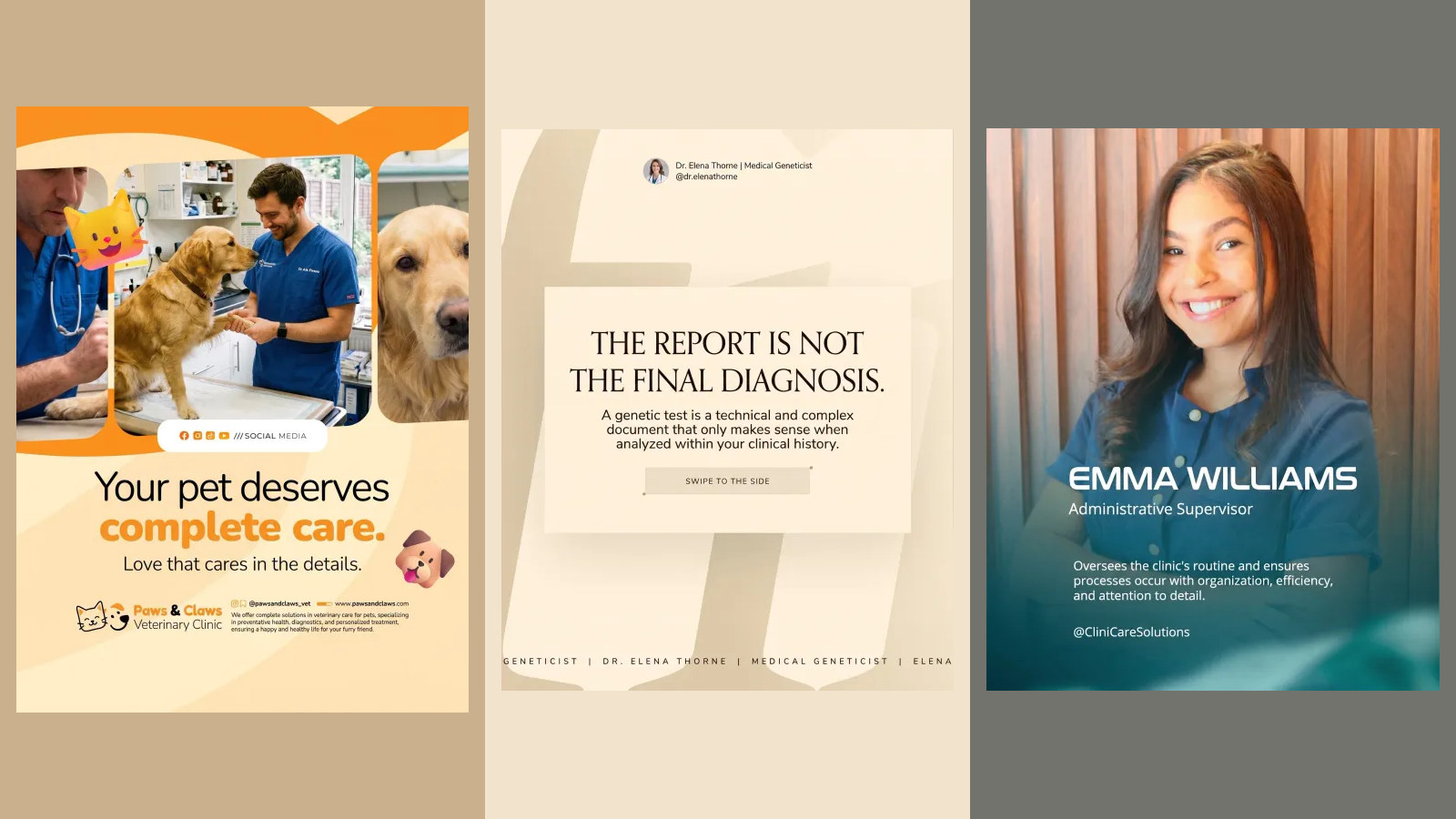
- The finished posts shown were made by our own product for a practice we invented, from briefs we wrote by hand. We sell the tool that made them and that is disclosed where it becomes relevant.
Sources