Social media for real estate agents: what you can say about a house, and what you cannot
The word list every agent has been shown came from a HUD memo that was withdrawn thirty years ago. The rule that replaced it is shorter and harder. What to post, the licence line that belongs in the caption, why boosting a listing is a different act from posting one, and the six posts that get a listing appointment.
Almost nothing a real estate agent posts is about the thing they are actually selling. The listing sells itself on the portal, to buyers who were already looking, and the agent's feed reaches almost none of them. What the feed sells is the next listing: it is seen by the neighbour who will move in eighteen months, by the couple who are two years out, and by the person who has already decided to sell and is now deciding between three names. That is a slow, unglamorous job, and it is worth more than any single sale. This article is about doing it in the half hour a week an agent has between showings, and about the two rules that make a property caption different from every other caption on this blog.
Our articles are still written by humans!
Get human written articles in your Google feed.
What social media actually does for an agent
Two things. First, it decides who gets called when somebody on your patch decides to sell. That call goes to a name the seller recognises, and recognition is built by being seen twenty times over two years, not by being brilliant once. Second, it is the reference check. Every seller who is given your name looks you up before they reply, and what they find is either an agent who knows a specific area in specific detail or a stock photograph of a house with keys on it. The second one is what everybody has, which is why the first one works.
What it does not do is find buyers for the listing you have today. Buyers are on the portals, where they were already searching, and no amount of reach fixes the fact that your followers are mostly people who are not moving this year. Any proposal that promises buyer leads from an Instagram grid is selling you something else, usually at agency rates.
The six posts that get a listing appointment
- The listing, described as a property. What was built when, what has been replaced, what the lot does, what the commute is. Facts about the house, in the order somebody would ask them. This is the post, and it is also the one that keeps you inside the fair housing rule without thinking about it.
- What it sold for. Asking, closing, days on market, number of offers. One street, one number, once a fortnight. It is the only market report anybody reads, and it is the single most convincing thing an agent can publish, because it is a result rather than a claim.
- The step of the process people get wrong. What a survey finds, what an appraisal is for, what happens between offer and close, what a disclosure packet is. You know, they do not, and a person who learned something from you has met you.
- The number that answers a question. What it costs to list. What the average is on your street. What you spend on a property before it goes on. Publish the figure and you will get calls from people who were too embarrassed to ask.
- The person who turns up. One agent, named, with the area they cover. A seller is choosing a human being to be in their house for two months.
- The area, in detail that proves you live there. Which end of the street floods, where the parking is real, when the school run makes the road impassable. This is the post that separates you from the agent two towns over, and it is the one nobody makes.


The word list everybody quotes, and the rule that actually applies
Every agent has been shown a list of forbidden words. Family. Safe. Walking distance to church. Perfect for. Master bedroom. The list is passed around in training decks and in blog posts with titles like the words you cannot use in 2026, and it is worth knowing where it came from, because the answer changes how you use it.
It came from a HUD memorandum in 1989, which was folded into a regulation at 24 CFR Part 109. That part was removed from the Code of Federal Regulations effective May 1996, in a regulatory clean up, and it has never been replaced with another list. So there is no current federal register of banned words, and anybody who tells you a specific word is illegal is quoting something that was withdrawn thirty years ago.
What is still in force is shorter and harder to game. The statute makes it unlawful to publish any notice, statement or advertisement about the sale or rental of a dwelling that indicates any preference, limitation or discrimination based on race, colour, religion, sex, handicap, familial status or national origin. The regulation that survives, at 24 CFR 100.75, spells out that this covers words, phrases, photographs, illustrations, symbols or forms which convey that a dwelling is available or not available to a particular group. The test is what an ordinary reader takes from it, not what you meant.
Which means the word list is a symptom and not the rule. Family room is a room; perfect for a family is a preference. Walking distance to St Anne's is a fact about a street; ideal for a churchgoing couple is a preference. Photographs count too, so a listing carousel where every human being in it looks the same is making a statement whether or not the caption does. The rule you can actually hold in your head while writing at nine at night is one line: describe the property, never the person you imagine living in it. Say what is there. Do not say who it suits.
The licence number, and saying you are an agent
Two disclosures, both easy to keep and easy to forget. The first is your licence. If your state requires your licence identification number on materials that solicit a client relationship, a social post is one of those materials. California does not leave it to inference: the statute requires the licensee's name, licence identification number and responsible broker's identity on solicitation materials intended to be the first point of contact, and it defines those materials to include advertisements on television, in print, or electronic media. An Instagram post is electronic media that solicits a client relationship. Most states have some version of this and the details differ, so read your own commission's page. The practical answer is the same everywhere: put the number in your bio and in the footer of every post, the way the examples here do, and then stop thinking about it.
The second is that you are an agent at all. The REALTOR Code of Ethics requires members to present a true picture in their advertising and to ensure their status as a real estate professional is readily apparent in it. This matters more on social media than anywhere else, because the format encourages a personal voice and a personal voice is exactly what blurs the line. A post that reads as a neighbour sharing news about a house down the road, made by somebody who has that house listed, is the case the article exists for.

Boosting a listing is a different act from posting one
This is the part that catches people who have got everything else right, and it is new enough that most training has not caught up. Writing a caption and choosing who sees it are two separate acts, and both of them are advertising. When you put money behind a listing post you are handed an audience picker, and every choice in it is a choice about who learns that a house is for sale.
HUD published guidance in May 2024 on how the Fair Housing Act applies to advertising housing through digital platforms, including where the targeting and delivery are done by algorithms. The point it makes, in plain terms, is that limiting or denying people information about housing opportunities can violate the Act, and that advertisers do not shed responsibility by using somebody else's targeting tools. Age brackets, parental status, postcode radius drawn to exclude a neighbourhood, interest categories that stand in for a protected class: these are the settings the guidance is about, and they are settings agents use every week without thinking of them as copy.
The safe habit is boring and takes ten seconds. Boost housing posts to a wide geographic area with no demographic narrowing at all, use the platform's housing category where it offers one, and let reach be reach. If a boost only works when it is narrowed, that is a sign about the post rather than about the audience.
Whose photographs are they
A short warning rather than a rule, because the answer depends on a contract we have not read. The photographs of a listing were usually taken by a professional under a licence to the brokerage for that listing, and that licence often has an end. Agents post them for years afterwards, in retrospectives, in a moved anniversary post, in a portfolio grid. Sometimes that is fine and sometimes it is a bill. It costs nothing to ask your broker once what your photographer's agreement actually says, and it is the kind of question that only ever gets asked after the letter arrives. If you furnish an empty listing with AI before posting it, the tools that do that are compared in the best AI interior design tools.
The posts that do nothing
We have generated all of these for property customers and watched them do nothing, which is the only reason we are confident listing them.
- The just listed graphic with no address, no number and no detail. It is a picture of the words just listed.
- The keys on a table, the sold sign with a sunset, the stock family at a door. Every agent in the country has posted this image this month.
- The market update built from national figures. Nobody is moving nationally. They are moving out of one street and into another.
- The motivational quote over a house. It says you have an app that puts words over pictures.
- The congratulations to my wonderful clients post, with the clients cropped out. It is about you, and the reader can tell.
- The reel of a kitchen island, cut fast to music. Beautiful, and it tells nobody who you are or what anything cost.
Which platform, and how often
Facebook first, because that is where the local group is and where the neighbour who is about to sell already spends the evening. Instagram second, same posts, because property is visual and because Instagram posts now surface in Google search. Your Google Business Profile third, same posts again, because that is what a seller checking your name actually lands on. LinkedIn only if you work with investors or relocation. One or two posts a week, the same post everywhere, is more than enough, and consistency over two years beats intensity over two months, because the transaction you are advertising for has not happened yet.

If the writing is the part that never happens between showings, that is what our product does from your own site and listings, and what a chat model will do if you tell it the week's numbers. Whichever you use, the one line test belongs in the instructions rather than in your head at the end, because a model asked to write a warm inviting caption for a family home will happily hand you a fair housing problem in a friendly voice. Models default to that register unless told not to.
Frequently asked questions
What should a real estate agent post on social media?
The listing described as a property, what things sold for, the step of the process people get wrong, the number that answers a question, the person who turns up, and the area in detail that proves you live there. Post for the seller who will call you in eighteen months, not for the buyer, who is on the portal already.
What words can a real estate agent not use in a listing description?
There is no current official list. The 1989 HUD word list was removed from the regulations in 1996 and never replaced. What still applies is the Fair Housing Act and 24 CFR 100.75, which prohibit any advertisement indicating a preference or limitation based on a protected class. The working test is to describe the property and never the person you imagine living in it.
Does a real estate agent have to put a licence number on social media posts?
In many states, yes, because a post that solicits a client relationship is a solicitation material. California names advertisements in electronic media in the statute and requires the licensee's name, licence identification number and responsible broker's identity. Check your own commission, and put the number in your bio and every post footer regardless.
Is it a problem to boost or target a listing post?
It can be. Choosing who sees a housing advertisement is itself advertising, and HUD issued guidance in 2024 on how the Fair Housing Act applies to targeted digital housing ads, including algorithmic delivery. Boost to a wide geographic area, use the platform's housing ad category, and avoid demographic narrowing entirely.
Which social media platform is best for real estate agents?
Facebook first, because local groups are where a future seller already is. Instagram second with the same posts. Google Business Profile third, because that is where somebody checking your name lands. One or two posts a week, everywhere, for two years.
How we researched this
- The advice here comes from what works for local businesses whose customers are won within a few miles of home, which is the category this product is built for. Real estate differs from the rest of it in one way that shapes the whole article: almost nothing an agent posts is about the thing they are actually selling, which is the next listing, not this one.
- The fair housing position is read from the statute and the regulation that are still in force, both opened on 19 August 2026 and linked below, plus HUD's own 2024 guidance on advertising through digital platforms. The withdrawal of the 1989 word list is a matter of record in the Federal Register at 61 FR 14378, effective May 1996. None of this is legal advice and your broker's compliance rules are stricter than a blog post.
- The licence disclosure quoted is California's, because it names electronic media in the text of the statute rather than leaving it to be inferred. Most states have a version of the rule and the details differ. Your own commission's page is the one that governs you.
- The posts we tell you to skip are posts we have generated ourselves for property customers and watched do nothing. Being able to say which of our own drafts failed is the only qualification we claim for that list.
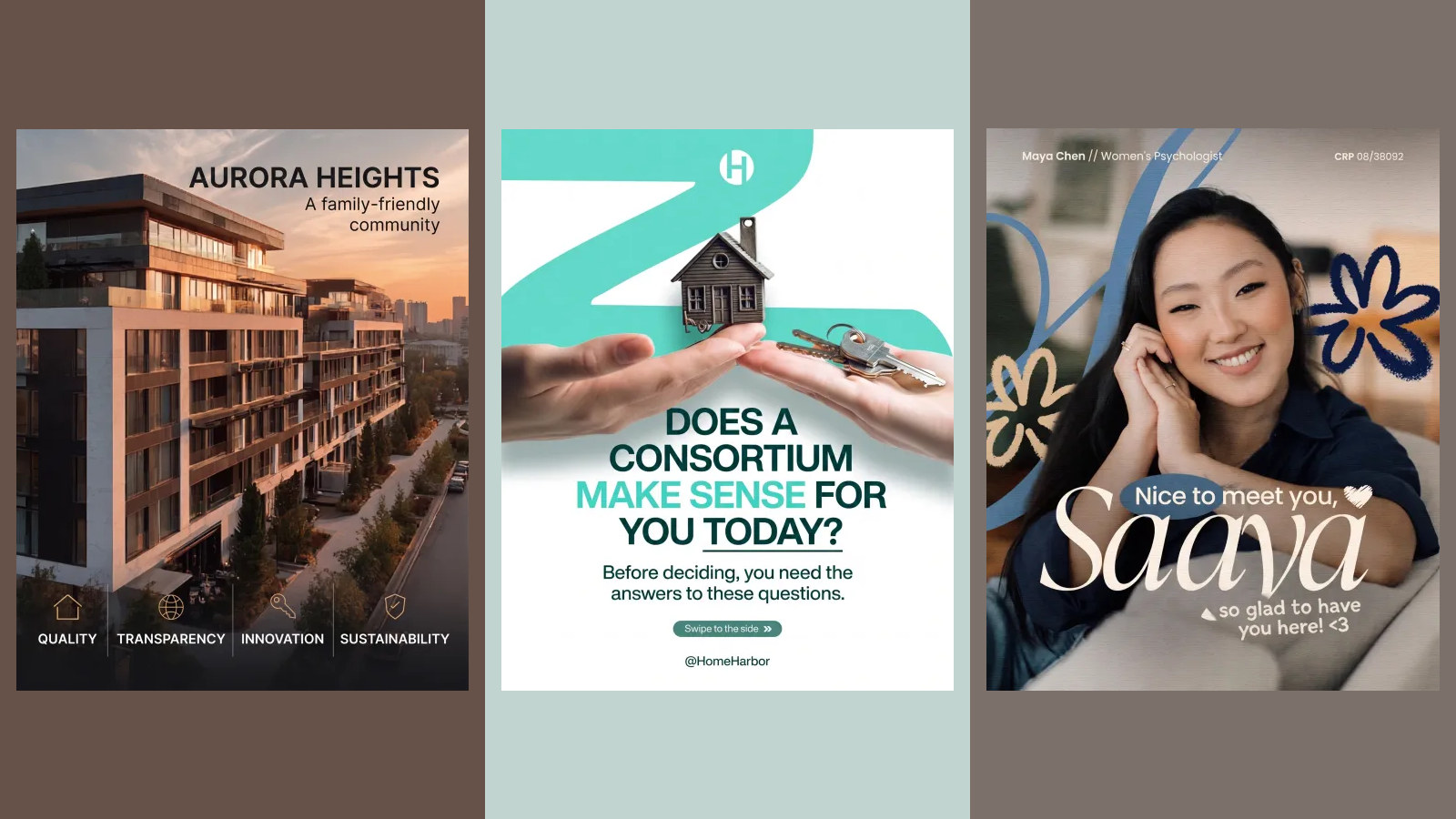
- The finished posts shown were made by our own product for a brokerage we invented, from briefs we wrote by hand. We sell the tool that made them and that is disclosed where it becomes relevant.
Sources
- 142 U.S.C. 3604(c), discrimination in the sale or rental of housing (advertising)
- 224 CFR 100.75, discriminatory advertisements, statements and notices
- 3Guidance on Application of the Fair Housing Act to the Advertising of Housing, Credit, and Other Real Estate-Related Transactions through Digital Platforms
- 4Business and Professions Code section 10140.6 (licence identification number on solicitation materials)
- 5Case Interpretations Related to Article 12 of the Code of Ethics